

What is Machine Utilization?
Machine utilization is the percentage of time a machine is actively producing output versus the total available production time. A machine available for 8 hours per shift but actively running for only 5 hours has a utilization rate of 62.5%. The remaining 37.5% represents lost capacity — idle time, breakdowns, changeovers, or waiting.
For most manufacturing SMEs, machine utilization rates average between 55–70%. By identifying and addressing the causes of downtime, factories can often increase utilization to 80–90% — unlocking significant additional capacity without adding new equipment.
A 15% improvement in machine utilization is equivalent to adding a full production shift without purchasing new equipment.
Common Causes of Low Machine Utilization
Before applying solutions, it's essential to understand why machines are underutilized:
Unplanned Breakdowns
Unexpected equipment failures create unplanned downtime that often cannot be recovered within the shift. Without predictive maintenance systems, breakdowns are frequent and costly.
Long Changeover Times
Excessive time spent switching between product types, tooling setups, or configurations keeps machines idle between production runs.
Material Shortages
When raw materials or components run out mid-production, machines are forced idle while teams scramble to resupply. Poor inventory planning is a leading cause of avoidable downtime.
Operator Absence or Skill Gaps
Machines sit idle when operators are absent or when available operators lack the skills to run specific equipment. Cross-training programs can mitigate this risk.
Poor Production Scheduling
Inefficient scheduling leads to machine queues — some machines overloaded while others sit idle. Without visibility into machine capacity, scheduling decisions are made imprecisely.
Strategies to Improve Machine Utilization
01
Implement Real-Time Machine Monitoring
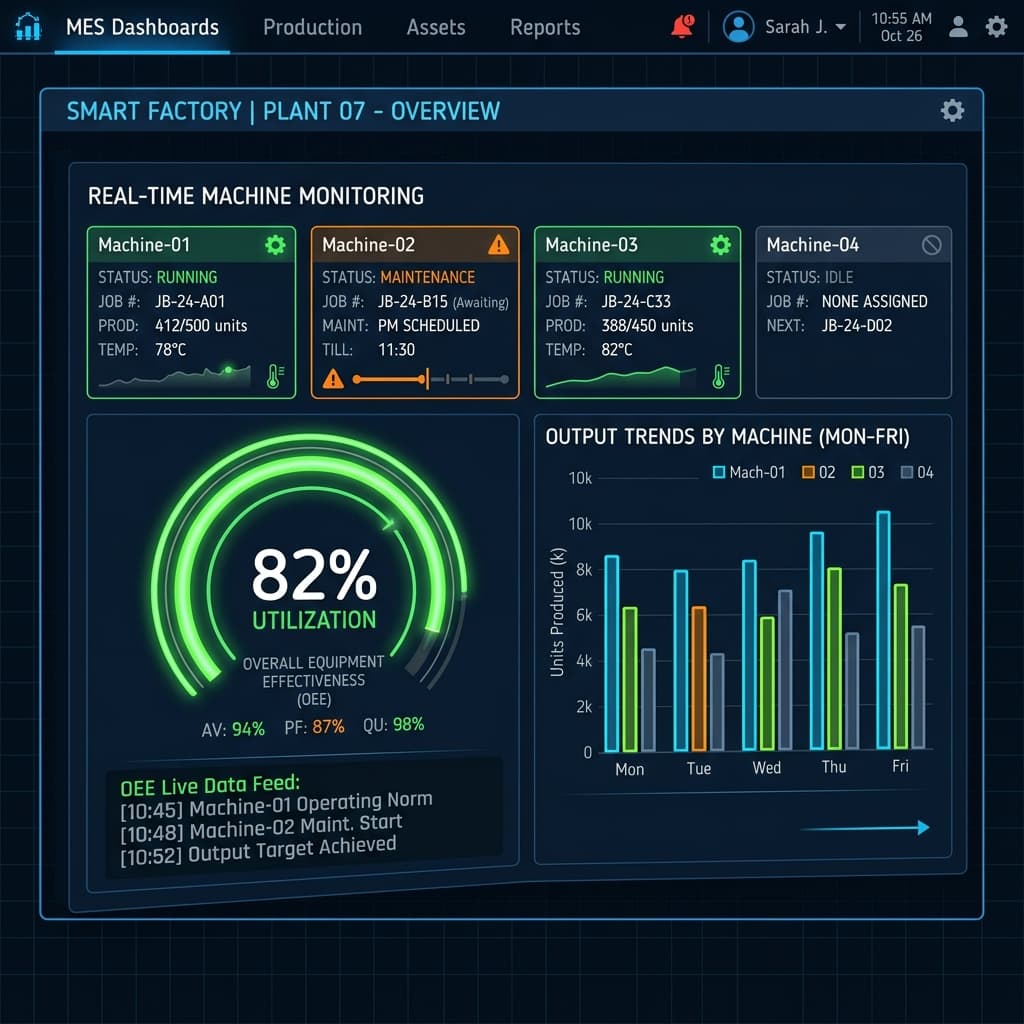
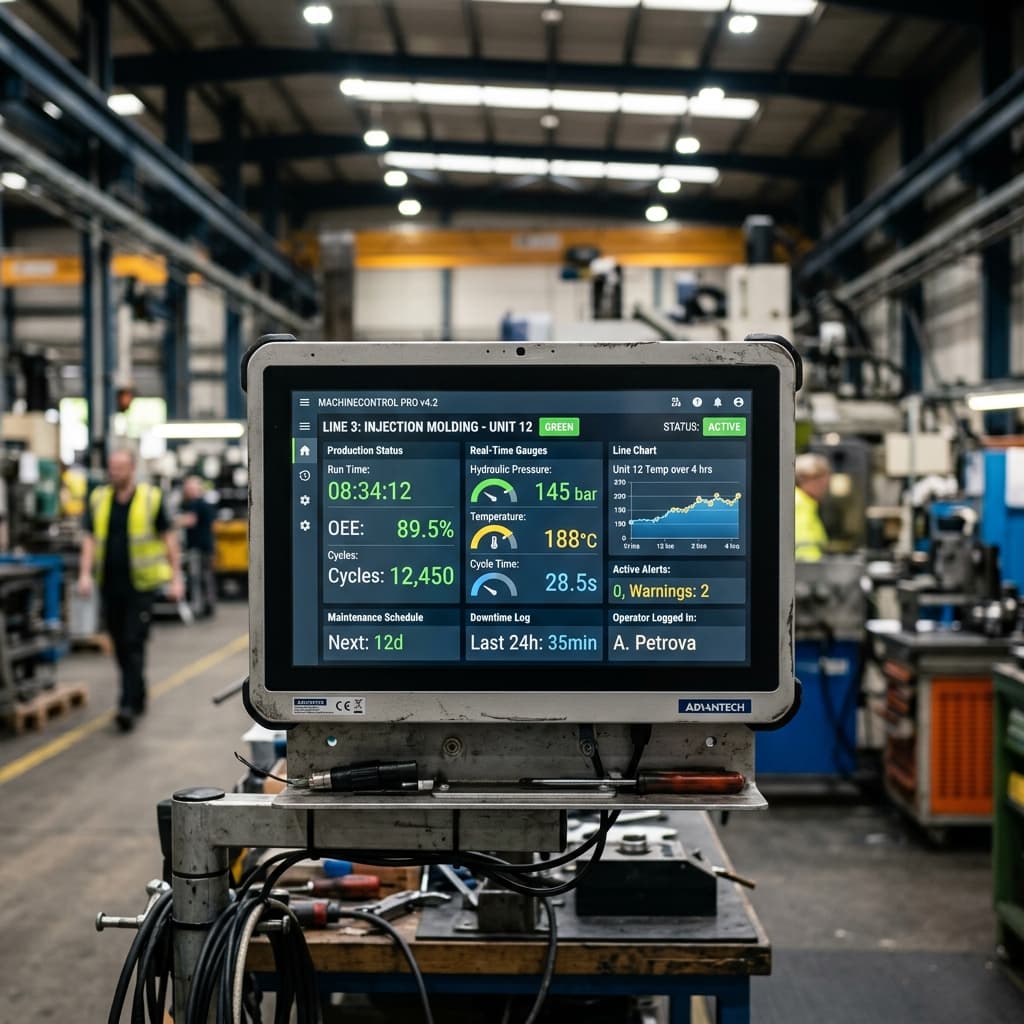
The first step is visibility. Real-time machine monitoring systems track running, idle, breakdown, and maintenance states automatically. Managers instantly see which machines are productive and which are idle, enabling faster intervention.
02
Track Downtime Reasons Digitally
Recording the reason for every downtime event — breakdown, changeover, material wait, planned maintenance — creates data that reveals patterns. Over time, recurring downtime causes become clear, enabling targeted corrective actions.
03
Optimize Production Scheduling
Using machine performance data to inform production scheduling reduces idle gaps between jobs. When schedulers know machine availability, capacity, and typical changeover times, they can create tighter, more efficient production plans.
04
Apply Preventive Maintenance Programs
Shifting from reactive to preventive maintenance — based on machine usage hours and performance trends — reduces unexpected breakdowns. Scheduled maintenance during low-demand periods minimizes production impact.
05
Reduce Changeover Times
Analyzing changeover activities and applying lean manufacturing principles can dramatically reduce the time machines spend between production runs. Even a 30-minute reduction in changeover time across multiple machines adds up to significant weekly capacity gains.
Measuring Machine Utilization: Key Metrics
OEE
Overall Equipment Effectiveness
Combines availability, performance, and quality into a single utilization score.
MTBF
Mean Time Between Failures
Average operating time between equipment breakdowns.
MTTR
Mean Time to Repair
Average time required to restore equipment after a failure.
CDT
Changeover Duration Time
Time machines spend in setup between production runs.